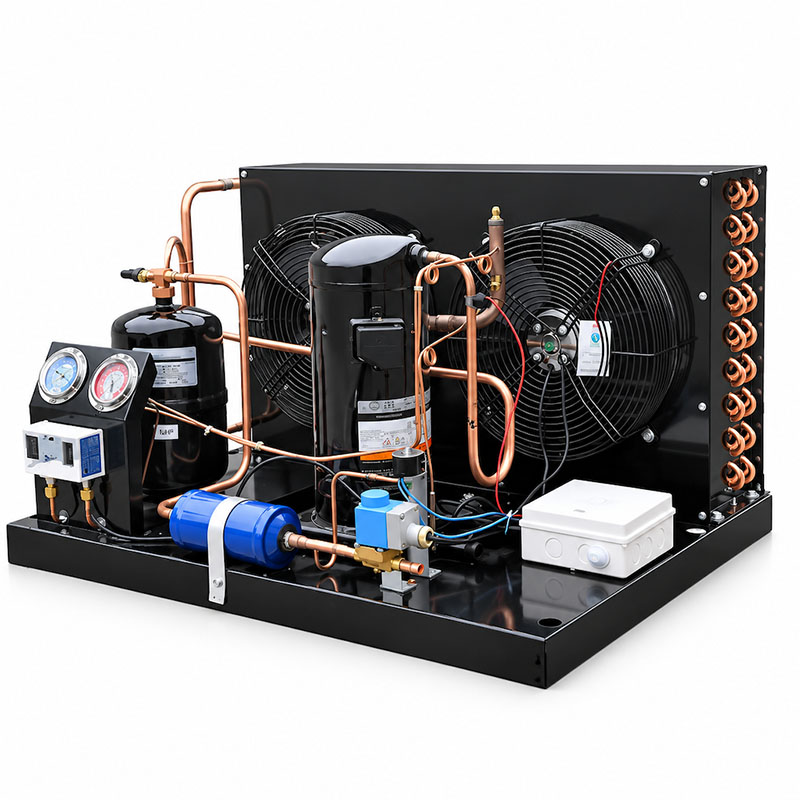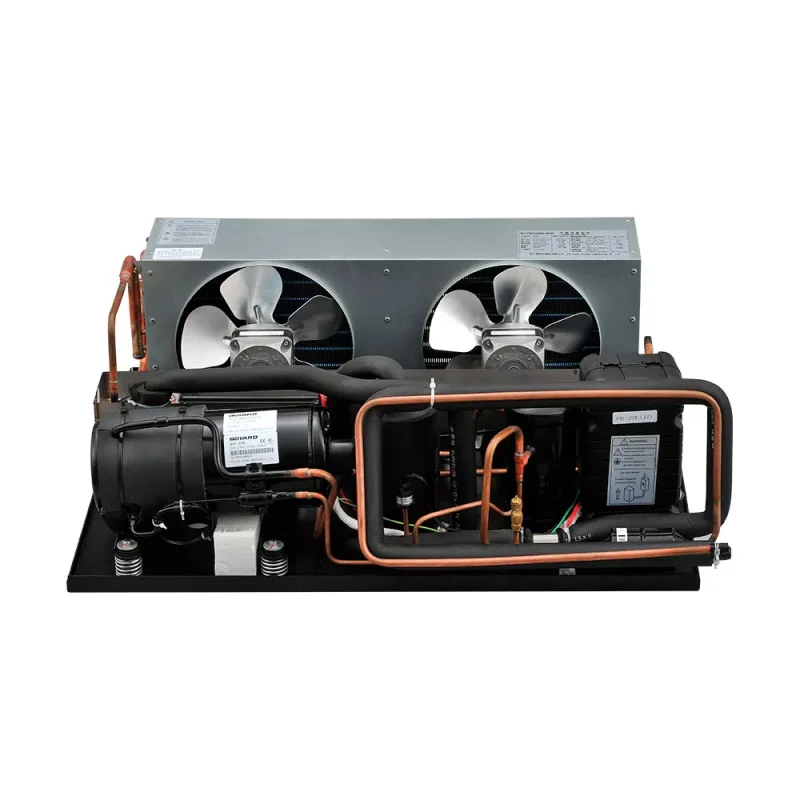
Danfoss MLZ038 Box-Type Condensing Unit
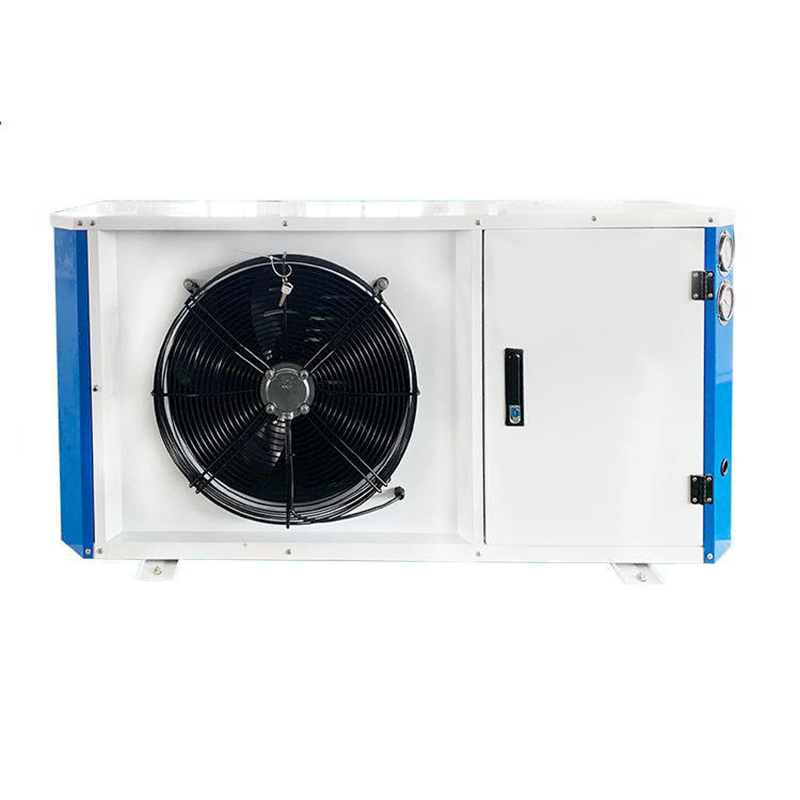
Danfoss MLZ038 Box-Type Condensing Unit
When the load grows, so does the cost of every failure — and the value of a unit that fails less often
A small condensing unit that trips on high pressure costs an afternoon and a service call. A larger one costs a day of product, a crew standing idle, and a customer who starts asking whether the cold room can be trusted at all. The Danfoss MLZ038 sits in the higher-capacity band of the MLZ box-type range, and that changes the economics of everything around it — especially maintenance. This is a unit to judge not by how cleanly it runs on commissioning day, but by how few phone calls it generates in year three.
01Positioning: Higher Capacity, Higher Stakes
The MLZ038 is built around a Danfoss MLZ scroll compressor — a medium-temperature platform for commercial refrigeration rather than deep-freeze duty — with a larger displacement than the smaller variants in the family. It is delivered as a box-type air-cooled unit, meaning the condenser, electricals and controls sit inside a weather-resistant enclosure instead of being exposed on a wall or roof. That places it in chilled storage, processing rooms, staging halls and other long-hour duties where the unit runs hard and the owner's tolerance for downtime is close to zero. The key difference from a smaller unit is not the design philosophy; it is the consequence of failure.
02Four Faults That Decide the Service Budget
Across commercial refrigeration, a small group of faults accounts for most avoidable call-outs. Each has an early signature — and on a box-type unit, catching that signature depends almost entirely on whether the enclosure is designed to be opened, inspected and cleaned on a routine schedule.
High pressure — the most frequent call of all
High-pressure trips dominate the summer schedule. The usual causes are ordinary: a condenser that has not been cleaned since spring, clearance too tight around the unit, a fan running below speed, overcharge, or non-condensable gas left after a rough repair. The early signature is a discharge pressure that climbs across successive hot afternoons, long before the switch trips. A cabinet protects the coil from debris but also hides it from casual view, which is exactly why external coil access and a documented cleaning interval matter more here than on an open frame.
Low pressure — slow, quiet, and diagnostic
Low suction pressure rarely arrives suddenly. It develops over weeks: a slow leak at a flare or seal, a restricted filter drier, an expansion valve drifting out of setting, or defrost that has quietly stopped working. The room stays vaguely cold and nobody notices until product quality slips. A technician who can reach the sight glass and gauges without moving a pallet will check them; one who cannot, will not — and that is how slow leaks become expensive ones.
Oil leaks and seepage — small stains, large consequences
Oil finds its way out through under-torqued flares, hardened seals, unsupported pipe joints shaking under vibration, or a brazed joint that passed a pressure test but not a thermal cycle. The tell is a dark film that returns after being wiped. Oil loss means lubrication loss, and that is how a scroll compressor moves from "working fine" to "seized" with very little in between. A defined, inspectable compressor base behind a removable panel makes the routine check actually happen.
Fan failure — heard by everyone, logged by nobody
Condenser fan problems announce themselves early: a worn bearing rumbles, a weakening capacitor causes a slow start, dirty blades add vibration, a loose terminal causes intermittent running. Every one of these raises condensing pressure before it stops the fan, which is why fan faults are so often misread as high-pressure faults. Logging fan current and listening at each visit is the practical answer — provided the blades can be reached without dismantling half the cabinet.
The real case for a well-built box: it does not eliminate these faults. It makes them visible earlier, because the unit is designed to be opened, inspected and cleaned as a routine — not defended against a technician who needs a ladder and a crowbar.
03Stability, Efficiency and Everyday Value
The scroll core contributes to fault avoidance in its own right: continuous compression, no suction or discharge valves to fatigue, low torque variation and quiet running. The enclosure contributes consistency — a compressor shielded from sun, rain and dust simply ages more slowly. On energy, the familiar rule of thumb holds: roughly two to three percent less compressor power for every kelvin by which condensing temperature is reduced. A clean coil, clear airflow and a working fan are therefore not just maintenance items; they are the cheapest efficiency measures on the site. For the contractor, the box arrives complete and tested, cutting site fabrication. For the buyer, the specification is legible. For the end user, the payoff is fewer calls, quieter operation and a unit that still looks like a finished appliance after several seasons outdoors.
Fault cost profile — tick the faults your site has already experienced
Enter your typical hourly loss and how many call-outs you see per year, then select the faults that have occurred. The panel below estimates the annual downtime exposure from those fault types.
04Where the MLZ038 Earns Its Place
The unit suits chilled storage rooms, food preparation areas, bakery and dairy holding, supermarket back-of-house and cold-chain staging spaces — anything running long daily hours where a temperature excursion turns into spoiled stock. It is not a deep-freeze solution, and it is not a substitute for an engineered industrial rack. It is a medium-temperature box-type condensing unit sized for the band where most commercial refrigeration actually lives, and built so that the faults which dominate service budgets are easier to see, easier to prevent and cheaper to resolve.
05Frequently Asked Questions
How does the MLZ038 differ from the smaller MLZ variants in daily operation?
The design philosophy is the same; the consequence of failure is larger. A bigger displacement serves a bigger room or a heavier product load, so a pressure trip or an oil leak takes more product value and more operating time with it. That is why routine coil cleaning, fan current logging and a panel-open oil check matter more — not less — as the unit size increases.
Why does the unit trip on high pressure only in summer?
Because the cause is usually marginal condenser performance rather than a hard failure. A partially fouled coil, restricted airflow or a fan running below full speed raises condensing pressure just enough to trip the switch when ambient climbs. Clean the coil and check fan current first; only then investigate charge and non-condensables.
How do I tell whether an oil stain is active seepage or old residue?
Wipe it clean and check again at the next visit. A fresh dark film that reappears is active seepage. Dry residue that does not return is usually from assembly or an earlier repair. A recurrence pattern is far more informative than any single inspection.
Can the MLZ038 be used for frozen storage?
The MLZ range is oriented toward medium-temperature refrigeration. Deep-freeze duty involves a much higher compression ratio and a different compressor family. Confirm the approved operating envelope against your actual evaporating and condensing conditions before specifying — never infer suitability from the unit's physical size.
What documentation can you supply for a tender or O&M file?
Dimensional drawings, compressor data, electrical information, enclosure ratings, refrigerant guidance and capacity information are available on request, so consulting engineers and contractors can complete submittals and maintenance files without relying on assumptions.
Spend the Maintenance Budget Before It Spends Itself
If your larger condensing units are generating a steady stream of pressure trips, oil checks and fan replacements, the answer is rarely a bigger compressor — it is a unit whose condenser, fan and panel layout make routine checks easy enough to actually happen. Tell us the room volume, product type, target temperature, design ambient, refrigerant and installation position, and we will confirm whether the Danfoss MLZ038 box-type platform suits the duty — or point you toward a better configuration.
You will get capacity information, drawings and a clear quote. No obligation, no pressure — just refrigeration engineering from people who read the service log before the sales sheet.
Request Technical Data & a Quote →