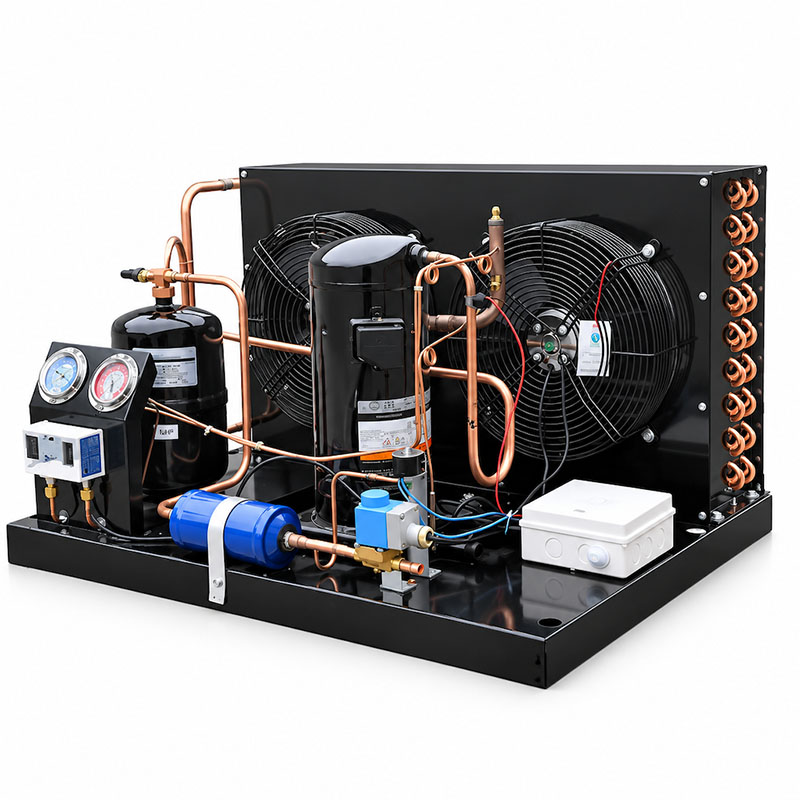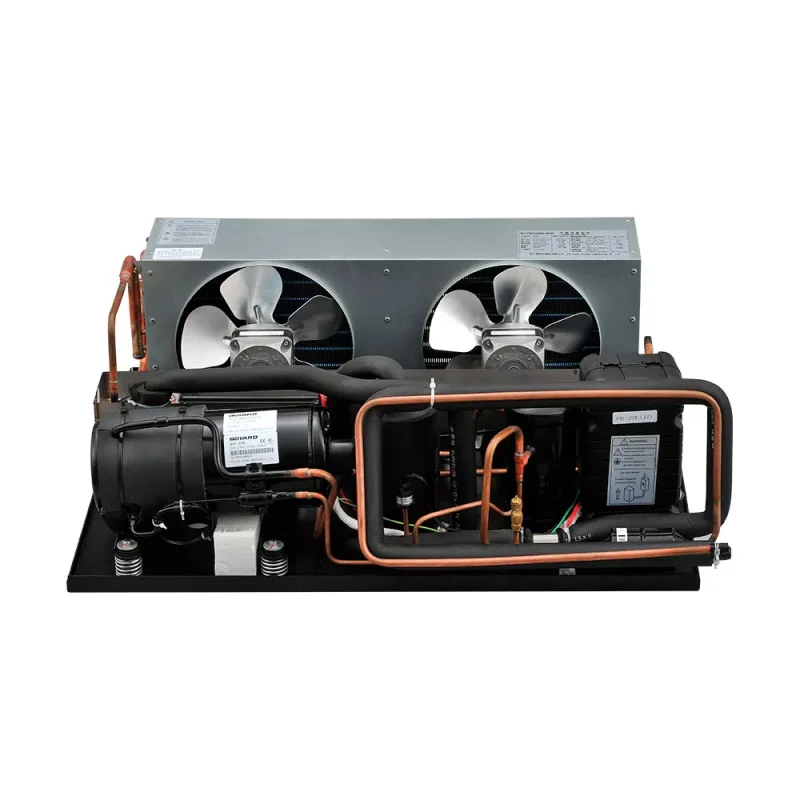
Danfoss MLZ026 Box-Type Scroll Condensing Unit
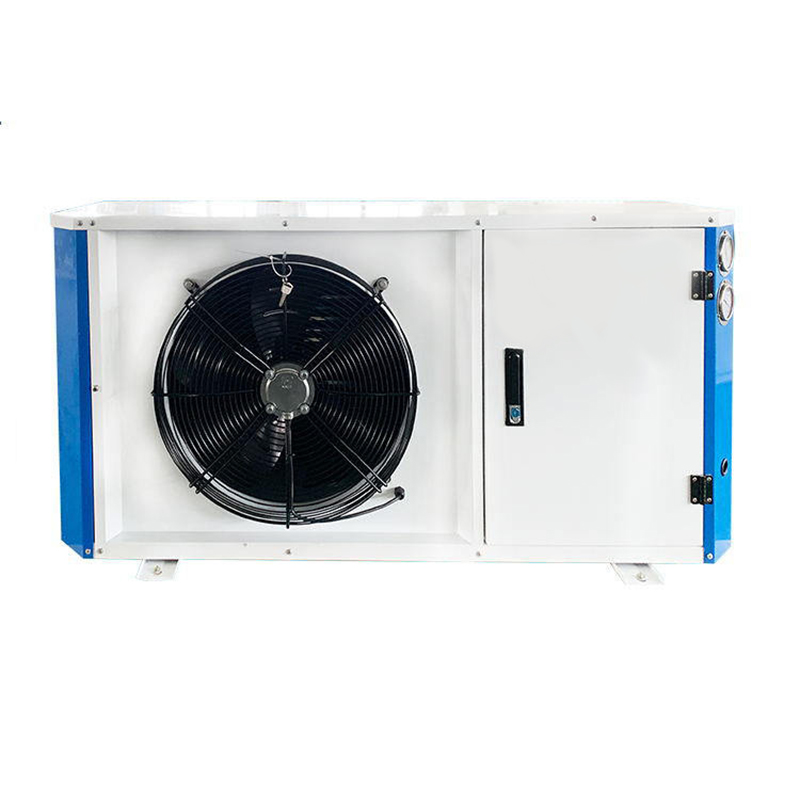
Danfoss MLZ026 Box-Type Scroll Condensing Unit
A box is not a compromise — it is a different answer to the same question
Mention a "box-type" condensing unit to some contractors and you can see the reaction: a slight narrowing of the eyes, as if the cabinet were a cost-cutting shortcut wrapped around a real machine. That instinct made sense a generation ago, when enclosures were often an afterthought bolted around an open frame. It no longer does. A properly engineered box-type unit — and the Danfoss MLZ026 platform is one — is a different design intent, not a lesser one. It trades a little service convenience for climate protection, noise control and a finished appearance, and on the right project that trade is clearly worth making.
01Product Positioning: Built for the Real Outdoors
The MLZ026 sits in the medium-temperature band of Danfoss's MLZ scroll compressor family — the workhorse core of commercial refrigeration, used across cold rooms, preparation areas and retail back-of-house. It is a compact scroll by the standards of the family, which makes it a natural match for small and medium-sized condensing units rather than large central plant.
Wrapping that compressor in a box-type package changes the unit's relationship with its surroundings. Instead of asking the installer to provide a shelter, a canopy or a weatherproof compound, the enclosure does that work itself. Electrical components live inside a protected cabinet. The condenser is shielded from direct rain and sunlight. The compressor sits in a micro-environment that is cooler and cleaner than an exposed rooftop or an unsheltered wall. And from the end user's point of view, the equipment on the wall or roof is a neat, finished appliance rather than a tangle of piping and wiring.
That positions the MLZ026 box-type unit for projects where the installation site cannot guarantee ideal conditions — and where "good enough until it rains" is not an acceptable specification.
A box-type unit wins when…
- The unit will be mounted outdoors, on a roof or on an exposed wall.
- Rain, dust, salt air or direct sunlight will reach the equipment.
- Noise needs to be kept down for neighbours or staff.
- The end user expects a tidy, finished-looking installation.
- Electrical protection and weather sealing matter for compliance.
An open-frame unit wins when…
- The unit lives in a sheltered indoor plant room.
- Technicians need immediate access at every visit.
- Coil cleaning happens very frequently (heavy dust or grease).
- Maximum airflow freedom matters more than weather protection.
- Budget is the dominant constraint and the site is protected.
02Where It Fits: Applications
The MLZ core is oriented toward medium-temperature refrigeration — chilled storage and holding rather than deep-freeze duty. Within that band, the box-type format is most valuable in these settings:
- Small and mid-sized walk-in coolers mounted on external walls or rooftops, where the unit will see rain, sun and temperature swings throughout the year.
- Restaurants and central kitchens with preparation rooms and cold stores, where the equipment often sits near the building envelope and noise must not carry into dining areas.
- Convenience stores and small supermarkets, where back-of-house space is tight and the unit may be visible from a yard or car park.
- Food production and bakery units where airborne dust and flour are a fact of life, and the enclosure keeps the condenser cleaner between services.
- Modular and containerised cold rooms, where the condensing unit must be a self-contained, weather-ready package.
- Pharmaceutical, laboratory and storage rooms where a controlled, stable temperature is required and the equipment should look professional.
03Core Advantages
Proven MLZ Scroll Core
The Danfoss MLZ family is a medium-temperature scroll platform with continuous compression, no valves to fatigue and smooth, low-pulsation gas flow.
All-Climate Enclosure
Rain, sun and dust are kept away from the condenser and electricals, so the unit can be installed in exposed positions without an additional shelter.
Reduced Noise
The cabinet absorbs and contains a meaningful share of compressor and fan noise, which matters on walls facing neighbours or customer areas.
Protected Electricals
Controls and terminals live inside the enclosure, improving ingress protection and simplifying compliance on outdoor installations.
Factory-Assembled Package
The unit arrives complete and tested, so site work focuses on mounting, piping and electrical connection rather than fabrication.
Clean, Finished Appearance
A neat cabinet is easier to hand over to an end user than exposed piping and wiring — and easier for them to accept as a finished product.
Box or open frame? Let your site answer.
Answer four quick questions about the project and we will show which format fits your installation conditions — and where the trade-offs land.
04Running Stability Across the Season
Box-type units are sometimes accused of running hotter than open frames, and the criticism has a kernel of truth in poorly designed enclosures. The answer is not to avoid boxes — it is to choose boxes engineered for airflow. On a well-designed unit, the condenser draws air through a defined path, the discharge is routed away from the intake, and the enclosure is ventilated so that heat does not accumulate around the compressor.
The MLZ scroll core supports that stability in its own way. Continuous compression means very little torque variation, so the compressor runs smoothly rather than in pulses. There are no suction or discharge valves to fatigue, which removes one of the most common failure points in reciprocating machines. And the compressor's mounting isolates vibration from the cabinet, keeping noise and mechanical stress low across long running hours.
The enclosure adds a less obvious form of stability: consistency. An exposed compressor endures sun, rain, frost and dust. A compressor inside a cabinet endures far less. Over a ten-year service life, that difference shows up in terminal condition, paint integrity and the general health of the electrical components.
Think of the cabinet as a controlled environment, not a container. The whole value of a box-type unit lies in what it keeps out — water, dust, sunlight and noise — while still letting enough air through to reject heat efficiently.
05Energy Efficiency
Efficiency in any vapour-compression system is dominated by the gap between condensing and ambient temperature. The larger that gap, the harder the compressor works for the same cooling effect. Everything that keeps condensing temperature down therefore pays back continuously. As a widely used rule of thumb, each 1 K reduction in condensing temperature corresponds to roughly a 2–3 % reduction in compressor energy use — approximate and system-dependent, but directionally dependable.
A well-engineered enclosure contributes to this rather than detracting from it. Airflow paths are designed so the fan does not fight unnecessary restriction. Intake and discharge are separated to prevent hot air recirculation. The condenser face is shielded from direct sun, which on an exposed open-frame unit can add several degrees to the effective ambient temperature. And because the coil stays cleaner for longer behind a cabinet, the unit holds its design condensing temperature well into its service life — provided routine cleaning actually happens.
06Maintenance Convenience: Honest Trade-Offs
This is where box-type units must be judged honestly. An enclosure does add a step to every service visit: panels must be opened before components can be reached. A well-designed cabinet minimises that step with removable front and side panels, a clear access route to the compressor and control area, and condenser coils that can be cleaned from the outside without dismantling the unit.
- Removable access panels should be held by simple fasteners, not hidden screws, and should open onto the compressor and controls directly.
- Electrical and refrigeration sections should be separated so a technician is not working around live terminals while checking pressures.
- Condenser access from the outside keeps the most frequent maintenance task — coil cleaning — quick.
- Standard components, including the Danfoss MLZ compressor, keep repairs local and spare parts widely available.
- Weather sealing should be inspected at every service, because a worn gasket quietly undoes the protection the cabinet was bought to provide.
The trade-off is real: a box-type unit will generally take a few more minutes per service than an open frame in a sheltered plant room. The question is whether those minutes are outweighed by the protection and noise benefit on your specific site. Use the decider above if you are unsure.
Field notes
On gaskets: the seals on access panels are part of the protection system. Replacing a worn gasket costs very little; water tracking into a control box costs considerably more.
On coil cleaning: a cabinet keeps the coil cleaner, not clean. Inspect the face at every service and clean when fin blockage is visible.
On clearance: follow the manufacturer's minimum distances on all sides. An enclosure cannot reject heat efficiently if it is boxed in by a wall and a stacked pallet.
07Practical Value Across the Project Chain
For the contractor, a factory-assembled box-type unit removes an entire category of site work — no shelter to build, no canopy to fabricate, no weatherproofing to improvise. It arrives complete, tested and ready to mount. For the procurement team, the specification is legible and comparable: compressor model, enclosure rating, coil arrangement and controls are all identifiable across suppliers, which simplifies tendering and repeat ordering. For the end user, the result is a quiet, neat, weather-protected unit that a normal service contract can maintain, and that does not need a purpose-built structure around it.
It is worth being clear about what this unit is not. It is not a deep-freeze solution, and it is not the right choice for a heavily dusted or greasy indoor plant room where rapid, frequent coil access matters most. It is a medium-temperature condensing unit designed to survive the real outdoors with dignity — and to look and sound acceptable while doing so.
Pre-installation checklist for a box-type unit
Tick each item as you confirm it on site. The progress bar updates as you go — useful before you book the installation team.
08Frequently Asked Questions
Is a box-type unit harder to maintain than an open-frame one?
It adds a step — panels must be opened — but a well-designed cabinet provides removable front and side panels with direct access to the compressor and controls, and condenser cleaning from the outside. In a sheltered indoor plant room, an open frame is quicker to service. On an exposed outdoor site, the box-type unit's protection often reduces the total number of interventions by keeping water and debris out.
Can this unit be installed fully outdoors in all weathers?
That is precisely what the enclosure is designed for, provided the unit's ingress protection rating and the manufacturer's installation instructions are respected. Check the rating plate and datasheet for the specific variant, ensure correct clearances and drainage, and inspect panel gaskets at each service.
Which refrigerants is the MLZ series used with?
The Danfoss MLZ scroll family is generally associated with medium-temperature commercial refrigeration and has historically been applied with HFC refrigerants such as R404A, as well as lower-GWP alternatives depending on the compressor variant. Refrigerant suitability, oil type and charge must be confirmed against the current manufacturer documentation for the exact model and the complete system — never inferred from the family name alone.
Can the MLZ026 be used for frozen storage?
The MLZ range is oriented toward medium-temperature duty. Deep-freeze applications involve a much higher compression ratio and call for a different compressor selection, typically from a low-temperature family. Confirm the approved operating envelope against your evaporating and condensing temperatures before specifying.
What documentation can you provide for a tender?
Dimensional drawings, compressor data, electrical information, enclosure ratings, refrigerant guidance and capacity information are available on request so consulting engineers and contractors can complete submittals without relying on assumptions.
Choose the Right Box for the Right Wall
If your installation site is exposed, noise-sensitive or simply not a plant room, a box-type unit is likely the more sensible answer than forcing an open frame into a position it was never meant to occupy. Tell us the room volume, product type, target temperature, design ambient, refrigerant and installation position — and we will confirm whether the Danfoss MLZ026 platform fits, or point you toward a better configuration.
You will get capacity information, drawings and a clear quote. No obligation, no pressure — just refrigeration engineering from people who read the installation conditions before the sales sheet.
Request Technical Data & a Quote →