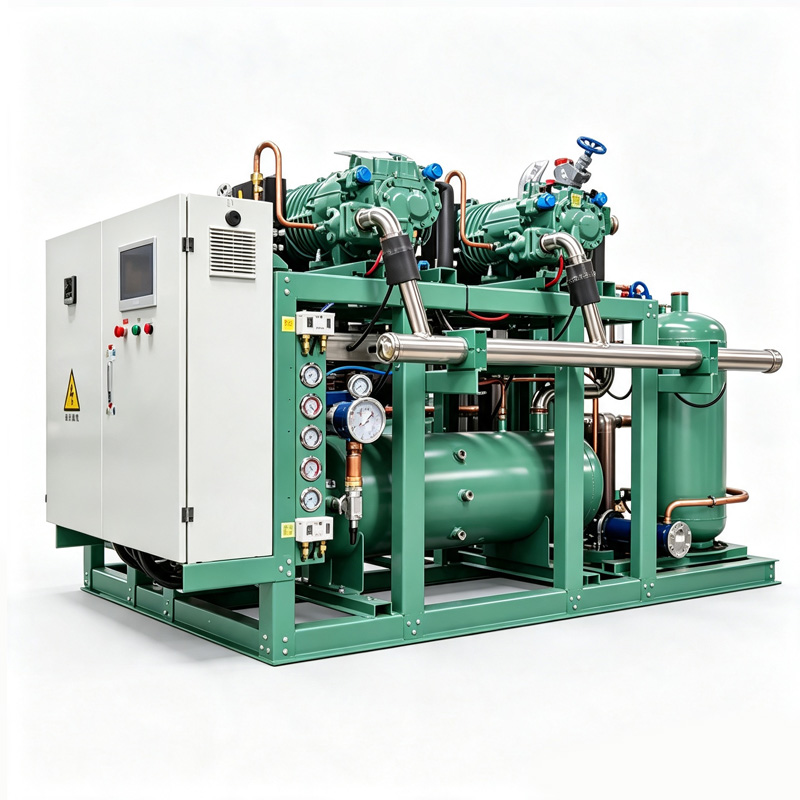
Built for the Middle Range, Trusted for the Long Run: The Bitzer 2JES-07 Air-Cooled Condensing Unit

In refrigeration, the best equipment is not always the one with the longest specification sheet. It is the one that keeps temperature stable, runs day after day, and is easy to service. The Bitzer 2JES-07 air-cooled condensing unit is positioned for medium and high temperature refrigeration applications where these priorities matter. It combines the recognized reliability of Bitzer compressor technology with an air-cooled condensing unit design that is practical for a wide range of commercial and industrial projects.
What the Bitzer 2JES-07 Is Designed For
The 2JES-07 is a medium and high temperature air-cooled condensing unit. It is not intended for every duty. It is a focused solution for projects that need dependable cooling in the medium and high temperature range. Instead of relying on water for heat rejection, the unit uses an air-cooled condenser, making it suitable for sites where water supply, water treatment, or cooling tower operation is difficult, expensive, or undesirable. This makes it a natural fit for distributed refrigeration, packaged systems, and locations where simple installation and lower water-related maintenance are important.
For refrigeration contractors, equipment purchasers, and end users, that focus is useful. A unit that is applied within its intended range can deliver better stability, easier service, and more predictable operation than a mismatched system that is forced to do too much.
Who This Condensing Unit Serves
Refrigeration engineering contractors need units that install cleanly, match system components, and reduce callbacks. The 2JES-07 offers a Bitzer-based platform that can simplify specification and support.
Equipment purchasers need consistent quality, available support, and predictable lifecycle value. A medium and high temperature air-cooled condensing unit with a recognized compressor brand can reduce uncertainty in procurement.
End users need stable temperature, low disruption, and manageable operating costs. Whether the application is food storage, processing, retail, or logistics, reliable cooling protects products and business continuity.
Typical Application Scenarios
- Cold storage for fresh produce, dairy, eggs, beverages, and other chilled products.
- Food processing and central kitchens where medium temperature cooling supports preparation, storage, and hygiene.
- Supermarkets, convenience stores, restaurants, and cold chain hubs.
- Pharmaceutical, medical, and laboratory storage where stable temperature matters within a properly designed system.
- Logistics and distribution centers with multiple cold rooms.
- Agricultural post-harvest cooling and processing.
- Industrial process cooling where medium or high temperature chilled water or direct expansion is required.
These applications share a common need: cooling that is reliable, repeatable, and not overly complicated to maintain. The 2JES-07 is positioned to meet that need when selected and installed correctly.
Core Advantages of the Bitzer 2JES-07
1. Bitzer Compressor Technology
The 2JES-07 is built around a Bitzer compressor, a name known in refrigeration for robust engineering and long service life. For engineers and buyers, this reduces uncertainty. For end users, it supports reliable operation and easier access to service knowledge. The compressor is the heart of the system, and choosing a recognized platform is a practical first step toward dependable cooling.
2. Optimized Air-Cooled Condensing Unit Design
The air-cooled condenser, fan, and compressor are matched as a system. This helps avoid mismatched components and supports stable condensing performance across changing ambient conditions. It also simplifies installation because no water circuit is required. For sites without reliable water access, or for projects where water treatment and cooling tower maintenance are unwanted, this is a major practical advantage.
3. Stable Operation for Continuous Cooling
In medium and high temperature refrigeration, stability is not only about holding temperature. It is about handling daily load changes, door openings, product loading, and seasonal ambient swings. The 2JES-07 unit is designed to support continuous duty and stable operation when properly applied and maintained. Key components are selected to protect the compressor and maintain oil and refrigerant circulation. Electrical protection and controls can be configured for project needs, helping the unit respond safely to real-world operating conditions.
4. Energy-Conscious Cooling
Energy use in refrigeration comes from compressor work, condenser fan operation, and heat rejection efficiency. The air-cooled condensing unit layout helps reject heat effectively, while the compressor and condenser are matched to reduce unnecessary cycling and pressure loss. When paired with proper controls, floating condensing pressure, and regular coil cleaning, the system can reduce energy consumption compared with poorly matched or poorly maintained alternatives. Actual savings depend on ambient conditions, load profile, refrigerant, controls, and installation quality. The goal is not a single claimed number, but a system that can run efficiently over time.
5. Maintenance Convenience
A condensing unit should not be a black box. The 2JES-07 design supports practical service access for common tasks: checking compressor oil, inspecting electrical connections, cleaning the condenser coil, checking fan motors, and verifying refrigerant charge. Air-cooled units avoid water-side scaling, pumps, and cooling tower treatment, which can simplify maintenance programs. With clear service points and available spare parts support, technicians can complete routine work faster and reduce downtime.
6. Flexible Integration
The unit can be applied in different system layouts, including direct expansion and other configurations where a medium or high temperature air-cooled condensing unit is appropriate. It can serve single or multiple evaporators when correctly designed, and it can be integrated with various control and defrost strategies depending on the application. This flexibility helps engineers adapt the unit to cold rooms, display cases, processing areas, and other cooling demands.
Why Stability Matters
Reliability is built from many details: a quality compressor, a correctly sized condenser, stable electrical components, good protection, and proper installation. The 2JES-07 should be installed on a solid base, with adequate airflow, correct pipe sizing, proper evacuation, and accurate charging. When these fundamentals are followed, the unit is positioned to deliver consistent cooling and fewer unplanned stoppages. For businesses, that means less product risk, fewer emergency service calls, and better peace of mind.
Stability also comes from applying the unit within its intended medium and high temperature range. Using the right condensing unit for the right duty is one of the most effective ways to avoid premature failure and poor performance.
Energy Efficiency in Real Projects
Efficiency is not a single number. It is a result of system design, ambient temperature, refrigerant, evaporator selection, controls, and maintenance. The 2JES-07 air-cooled condensing unit contributes through matched components and effective heat rejection. Engineers can further improve efficiency by using electronic controls, optimizing suction and discharge lines, avoiding oversized or undersized evaporators, and scheduling condenser cleaning. For end users, the practical benefit is a cooling system that can run efficiently without constant intervention.
Maintenance Made Practical
Routine maintenance includes:
- Keep the condenser coil clean and free of dust, debris, and obstructions.
- Check fan blades, motors, and mounting for vibration or wear.
- Inspect electrical terminals, contactors, and protection devices.
- Verify oil level and oil condition according to Bitzer guidance.
- Check refrigerant charge and look for leaks.
- Confirm controls, sensors, and safety switches operate correctly.
- Maintain clear airflow around the unit.
These tasks are straightforward, but they matter. A well-maintained 2JES-07 condensing unit can provide years of service and help protect the entire refrigeration system.
Application Value for Engineers, Buyers, and End Users
For refrigeration contractors, the 2JES-07 means a credible Bitzer-based solution that is easier to specify, install, and support. For purchasers, it means a known compressor brand, a focused product position, and a practical balance of first cost and lifecycle cost. For end users, it means stable medium and high temperature cooling, lower water-related maintenance, and a system that supports product quality and business continuity.
In food, retail, logistics, healthcare, and processing, that value is direct: fewer losses, smoother operations, and more predictable running costs. The unit is not positioned as a universal answer for every refrigeration challenge. It is positioned as a strong choice for medium and high temperature projects that need dependable air-cooled condensing performance.
Key Reasons to Shortlist the 2JES-07
- Bitzer compressor technology
- Medium and high temperature application focus
- Air-cooled design for water-free heat rejection
- Stable operation for continuous cooling demands
- Service-friendly layout for routine maintenance
- Suitable for cold storage, food service, retail, logistics, and process cooling
- Supported by a supplier focused on refrigeration compressors and condensing units
Conclusion and Consultation
If you are selecting equipment for a cold room, food processing line, supermarket, or process cooling project, the Bitzer 2JES-07 air-cooled condensing unit deserves a place on your shortlist. Contact our team for selection support, availability, and commercial details. We can help you confirm whether this model fits your medium or high temperature application and how to integrate it with your evaporators, controls, and refrigerant strategy.
Visit landacompressor.com to learn more or send your inquiry.
Parallel Condensing Units: Key Advantages and the Control Points That Keep Them Reliable