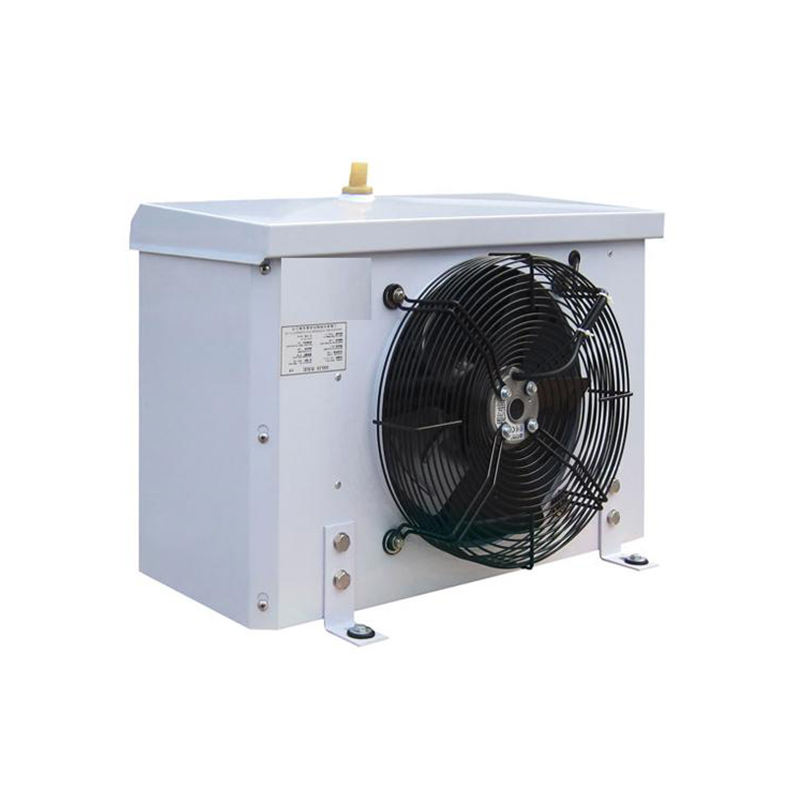
What are the application scenarios for condensers? Exploring common applications

As a heat exchange device that converts gas or vapor into liquid, condensers have extremely wide applications, covering almost all industrial and civil fields that require refrigeration, heat dissipation, or energy recovery.In this article, we will take you through the fascinating practical applications of condensers, helping you understand their versatility and importance.

Main Application Scenarios of Condensers
1. Refrigeration and Air Conditioning Systems
This is the most common application scenario. The condenser is a key component in the refrigeration cycle (often referred to as one of the "four major components").
- Household appliances: refrigerators, freezers, air conditioners, dehumidifiers. The condenser is responsible for cooling and condensing the high-temperature, high-pressure refrigerant vapor discharged from the compressor, turning it into a liquid.
- Commercial and central air conditioning: Central air conditioning systems in large buildings, shopping malls, office buildings, data center server rooms, etc., typically use large condensers.
- Transportation air conditioning: Air conditioning systems in cars, trains, airplanes, and ships. The condenser is usually installed at the front of the vehicle, relying on fans and airflow for cooling.
2. Power Generation Industry
3. Chemical and Petrochemical Industries
4. Food and Beverage Industry:
- Milk Processing: After pasteurization or UHT sterilization, hot milk needs to be rapidly cooled.
- Juice and Beverage Production: During concentration, evaporated water needs to be condensed.
- Brewing and Distilling: During alcohol distillation, condensers are used to condense alcohol vapor into liquid alcoholic beverages.
Choosing the Condenser Type Based on the Application Scenario
| Condenser Types | Working Principles | Common Applications |
| Air-cooled condenser | Uses air as the cooling medium, with a fan forcing air through the coils to carry away heat. | Applications include: household air conditioners, refrigerators, automotive air conditioners, small commercial refrigeration equipment, and areas with water scarcity or high water costs. |
| Water-cooled condensers | Use water as the cooling medium. Common types include shell-and-tube (water inside the tubes, refrigerant in the shell) and plate condensers. | Applications include large central air conditioning systems, industrial refrigeration systems, thermal/nuclear power plants, and large chemical equipment. High efficiency, but requires a cooling tower and water treatment system. |
| Evaporative Condenser | Combines water cooling and air cooling. Water is sprayed onto the coils for evaporation and heat absorption, while a fan simultaneously promotes evaporation. | Used for large-scale industrial refrigeration (such as cold storage) and chemical process cooling. More water-efficient than pure water-cooled condensers. |
| Hybrid Air-Cooled/Evaporative Cooling | Switches or combines the two modes depending on different operating conditions to optimize energy consumption. | Suitable for data centers and modern factories with extremely high energy efficiency requirements. |
In summary, the core function of a condenser is to dissipate heat and facilitate phase changes. Therefore, condensers are found in any process that requires cooling and liquefying gases or vapors, whether for refrigeration, maintaining process stability, improving energy efficiency, or recovering products.Guangzhou Landa is honored to support you in this process. Please feel free to Contact Us with any questions.
How to Maintain Your Condenser: A Practical Guide
What is a Condenser? The Heart of Your Cooling System
Related Article