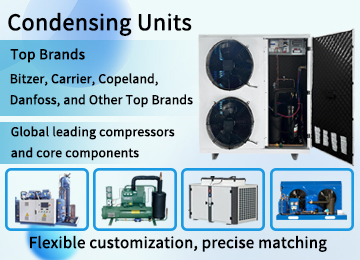
What is a condensing unit?
author: landacompressor
2025-10-24

Are you also struggling with the question of what a condensing unit is? Do its components, price, and brand often present difficulties in your purchase? Don't worry! Landa will guide you through the basics of condensing units to help you make an informed decision when choosing one.
A condensing unit is a self-contained, self-contained mechanical device whose core task is to remove heat from a room. It achieves the cooling/freezing effect by circulating the refrigerant through four main processes: compression, condensation, throttling, and evaporation.
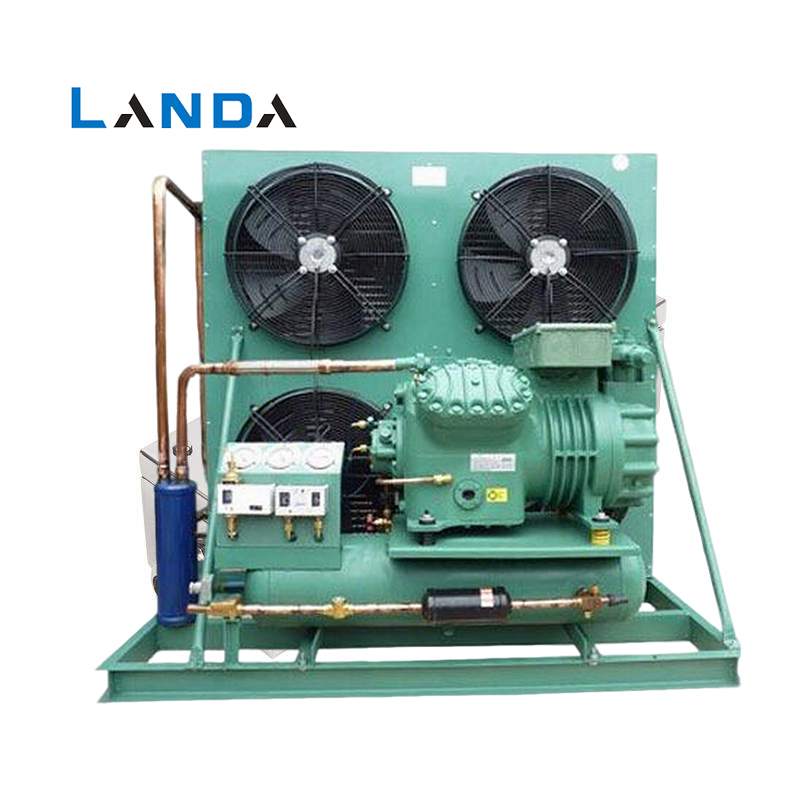
A typical condensing unit usually contains the following core components:
- Compressor: The heart of the system, powering the refrigerant cycle.
- Condenser: The heat sink of the system, releasing heat carried by the refrigerant into the surrounding air or water.
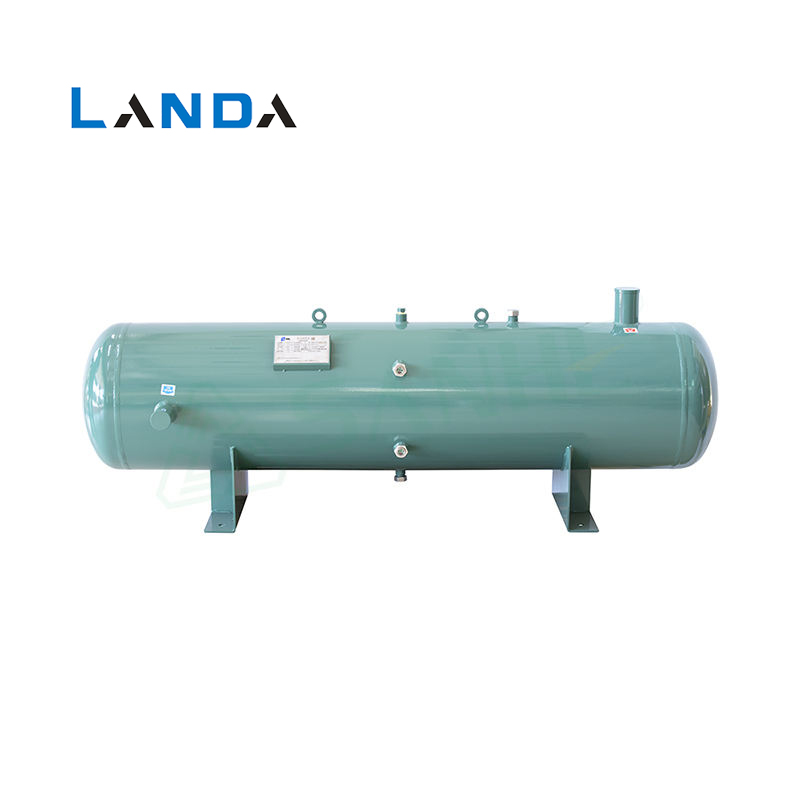
- Accumulator: Stores excess refrigerant.
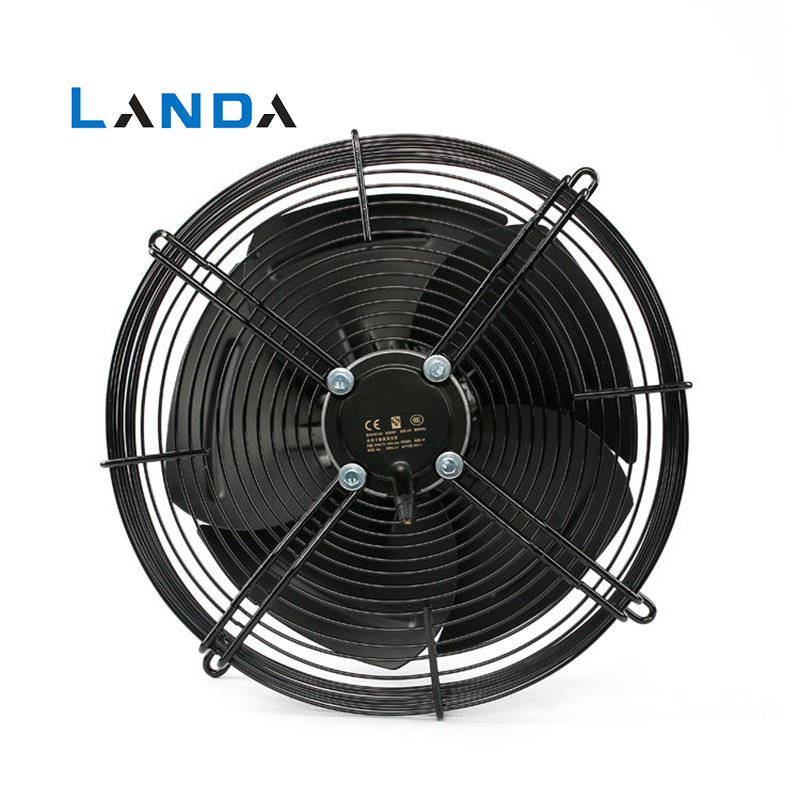
- Blower fan: If air cooling is used, this fan forces air through the condenser, accelerating heat dissipation.


What is the purpose of a condensing unit?
- Food Cold Chain and Storage: Various Cold Storage Facilities (Fresh Storage, Refrigerated Storage, Quick-Freezer Storage), Commercial Display Cabinets, Food Processing
- Commercial Air Conditioning and Refrigeration: Central Air Conditioning Systems, Process Air Conditioning
- Industrial and Specialty Refrigeration: Chemical and Pharmaceutical, Manufacturing, Specialty Applications
- Industrial and Specialty Refrigeration: Refrigerated Trucks/Cold Chain Logistics
What are the common types of condensing units?
| Type | Working Principle | Advantages |
| Air-cooled condensing units | The fan drives the air to flow through the finned tubes of the condenser to dissipate the heat of the refrigerant. | 1. Easy installation, no water source required. 2. Simple maintenance, primarily requiring fin cleaning. 3. Low initial investment. 4. Flexible layout, suitable for areas with water shortages. |
| Water-cooled condensing units |
Water is used as the cooling medium, flowing through the tube side/shell side of the condenser to take away the heat of the refrigerant.
A supporting cooling water system (such as a cooling tower and water pump) is required.
|
1. High cooling efficiency and stable operation. 2. Unaffected by ambient temperature fluctuations. 3. Low operating noise. 4. Relatively compact unit size. |
How to choose a condensing unit?
Key Determinants:Application and Temperature: Do you need refrigeration, freezing, or quick freezing?
-
Refrigeration (0°C to +10°C): Preserving fruits and vegetables, chilled meat, pharmaceuticals, and display cases.
-
Freezing (-18°C to -25°C): Frozen meat, ice cream, and long-term storage.
-
Quick/Deep Freezing (-30°C and below): Rapid freezing of foods and specialized industrial processes.
-
Cold Room Dimensions: Length, width, height, and calculated volume.
-
Insulation: The material and thickness of the insulation panels (e.g., polyurethane, 100mm/150mm).
-
Cargo: The type of goods stored, their initial temperature, and the daily volume of goods received.
-
Other Heat Sources: Frequency of personnel movement, lighting, and equipment heat generation.
Summary
In short, the condensing unit, the "heart" of the refrigeration system, provides continuous power and cooling for the entire system by compressing and condensing the refrigerant. It's widely used in our daily lives and industrial production, from supermarket refrigerators and home air conditioners to industrial cold storage and process cooling. If you'd like to learn more about condensing units, please Contact Us and Guangzhou LANDA provide you with more information on condensing units.
How to Choose the Right Condensing Unit: Key Factors and Practical Tips