What is a Scroll Compressor? A Practical Guide for Cold Storage and HVAC Professionals
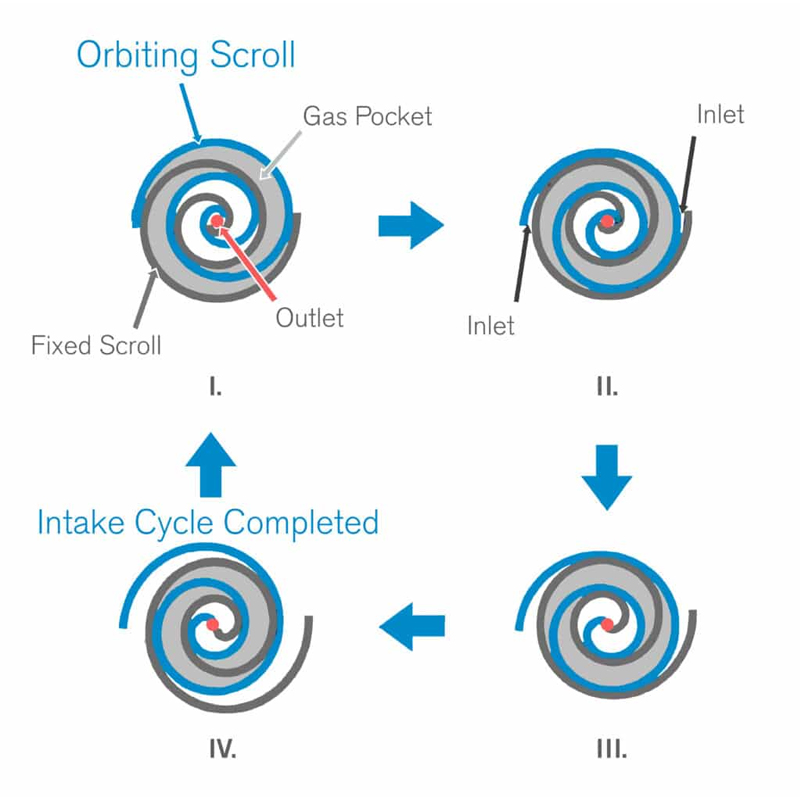
A scroll compressor uses two interlaced spiral elements to capture and compress refrigerant. One scroll remains stationary while the other rotates around it, sealing the refrigerant chamber and gradually reducing its volume to increase pressure. Compared to traditional piston compressors, it has fewer moving parts, resulting in a compact, smooth, and efficient compression process. For refrigeration and commercial systems, this means more stable temperatures, quieter operation, and greater reliability in harsh environments.
What is a Scroll Compressor?
Scroll Compressor Design: Key Elements
- Double-helix scroll: Creates a sealed cavity that captures refrigerant and compresses it during the swirling motion.
- Low vibration and wear: Fewer high-speed reciprocating parts mean less mechanical stress.
- High efficiency at part load: Continuous, smooth compression allows for optimal adaptation to varying cooling demands.
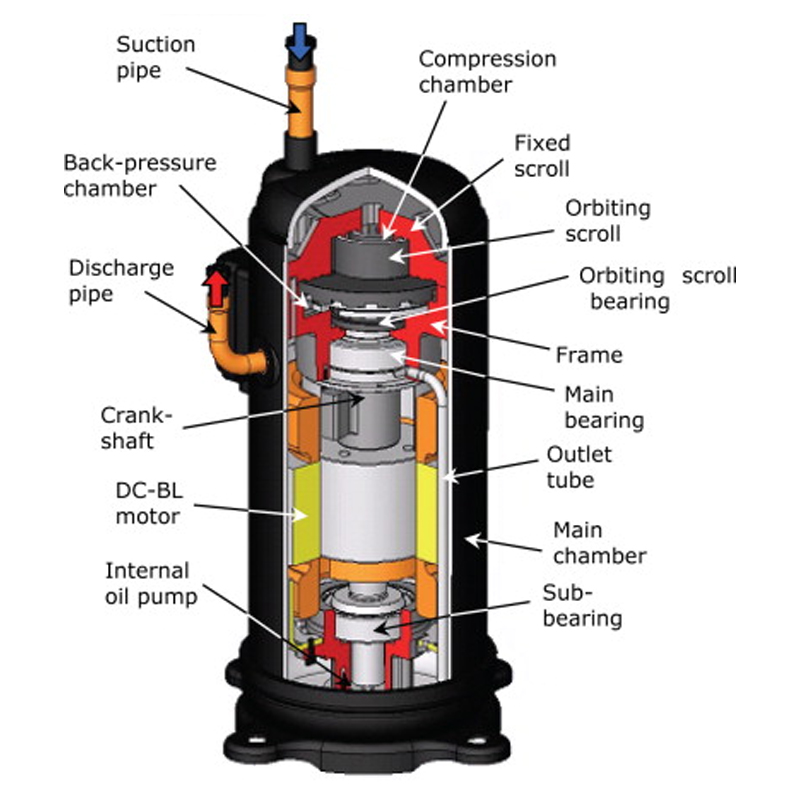
- In-line motor integration: Typically designed for direct installation in commercial units.
- Durable materials and coatings: Resistant to aggressive refrigerants and demanding refrigeration conditions.
- Lubrication management: Optimized to minimize oil residue and ensure continuous lubrication.


Advantages of Scroll Compressors
- Scroll Compressors vs. Reciprocating (Piston) Compressors: Scroll compressors offer smoother operation, less vibration, and higher efficiency at part load, making them well-suited for fluctuating refrigeration loads. Piston compressors can withstand high starting torque but are noisier at part load and generally less efficient.
- Scroll Compressors vs. Rotary Compressors: Scroll compressors generally offer higher efficiency, better performance, and longer maintenance intervals for medium to high cooling demands. Rotary compressors have a simpler design and are more cost-effective for smaller systems, but efficiency and lifespan may decline under high-load conditions.
- Scroll Compressors vs. Centrifugal Compressors: Centrifugal compressors excel in large, industrial-scale, high-cooling-load applications. Scroll compressors are suitable for medium- to mid-size systems, offering higher part-load efficiency and a smaller footprint.
- Key Takeaways: For air conditioning and refrigeration compressors in refrigerated and commercial environments, scroll compressors offer a balance of efficiency, quiet operation, reliability, and installability.
Common Scroll Compressor Brands and Features
- Copeland Scroll Compressors: The industry benchmark for reliability and global service; a comprehensive range of models ensures high efficiency under a wide range of operating conditions.
- Hitachi Scroll Compressors: Known for their rugged construction and outstanding performance in harsh environments, they are commonly used in industrial settings. - Danfoss scroll compressors: Utilize advanced design concepts, offer advanced control options, and are compatible with a wide range of refrigerants.
- LG scroll compressors: Offer high efficiency, a compact design, and integrate well with modern systems.
- GMCC scroll compressors: Offer competitive pricing, stable performance, and excellent service support, making them suitable for mid-range applications.
When selecting a brand, consider refrigerant compatibility, efficiency at the target load, service channels, and the availability of spare parts and technical support.



Summary
Guangzhou Landa, a one-stop service provider with 10 years of experience in cold storage design and installation, offers a wide range of brands, including renowned brands like Copeland, Danfoss, LG, GMCC, and Highly. We ensure the coordinated operation of each component (compressor, condenser, evaporator, and energy storage unit), and provide responsive service and customized optimization solutions. If you are interested, please Contact Us, we are always ready to provide high-quality services.
Which is better, a rotary compressor or a scroll compressor?
What are the specific benefits of the ZR and ZRD series compressors?