Which is better, a rotary compressor or a scroll compressor?
Still struggling to choose between rotary and scroll compressors? Guangzhou Landa, with 15 years of experience in refrigeration solution design and installation, will provide a comparative analysis of the differences between the two compressors and offer purchasing recommendations to help you make the most informed inventory and procurement decisions.
What are rotary and scroll compressors?
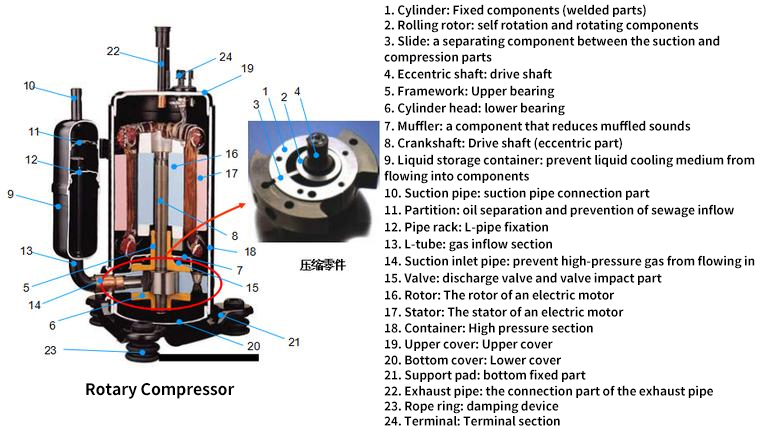
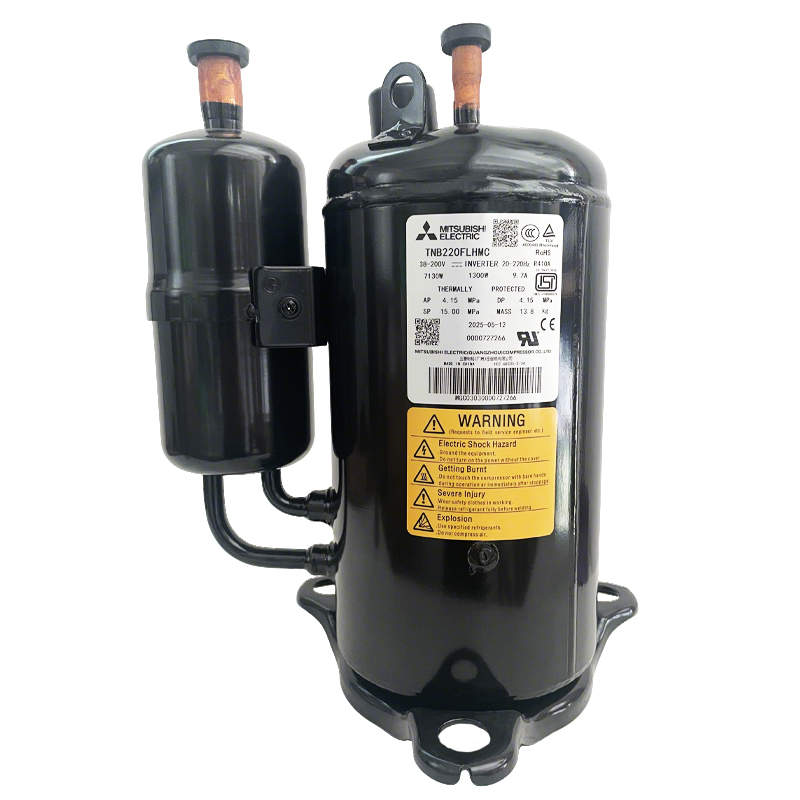
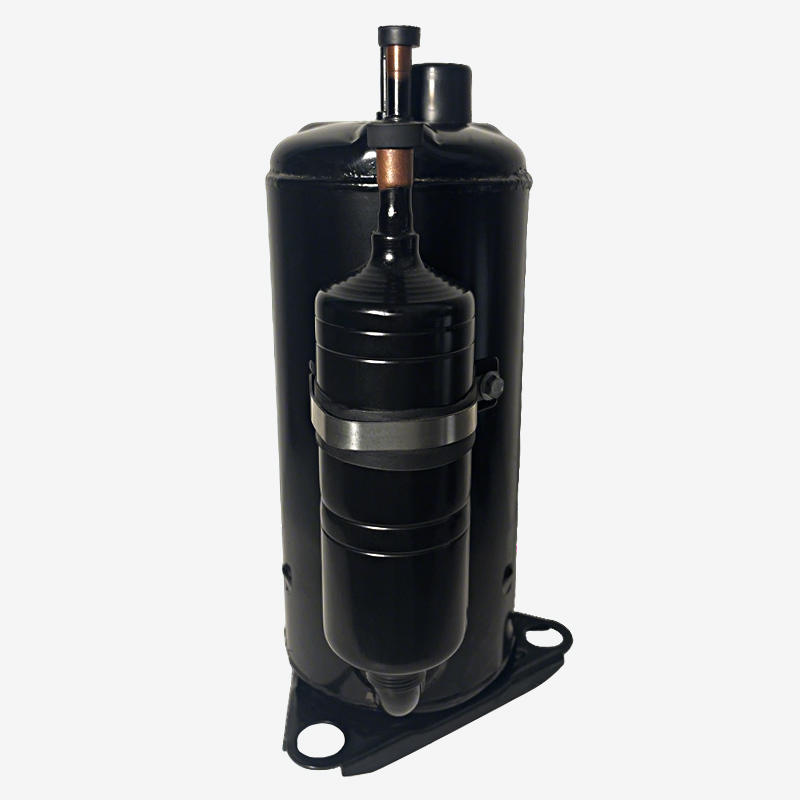
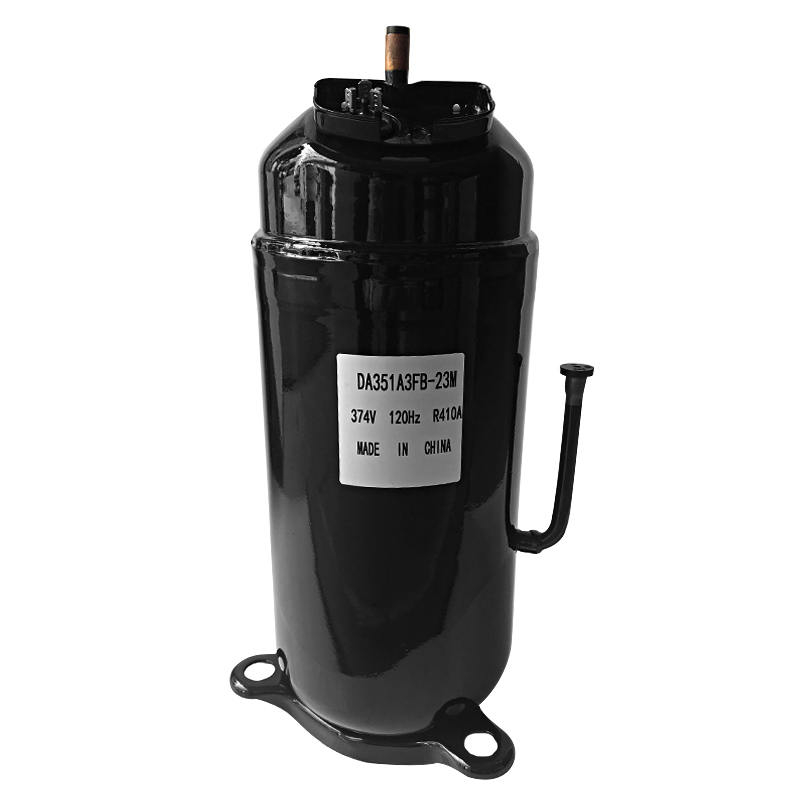
Rotary compressors offer a simple, durable, and economical design, suitable for light loads
The core operating principle is that an eccentrically mounted rotor rotates in a planetary motion within a cylinder, periodically changing the cylinder's internal volume. This, combined with suction and exhaust valves, completes the intake, compression, and discharge processes of the refrigerant gas.
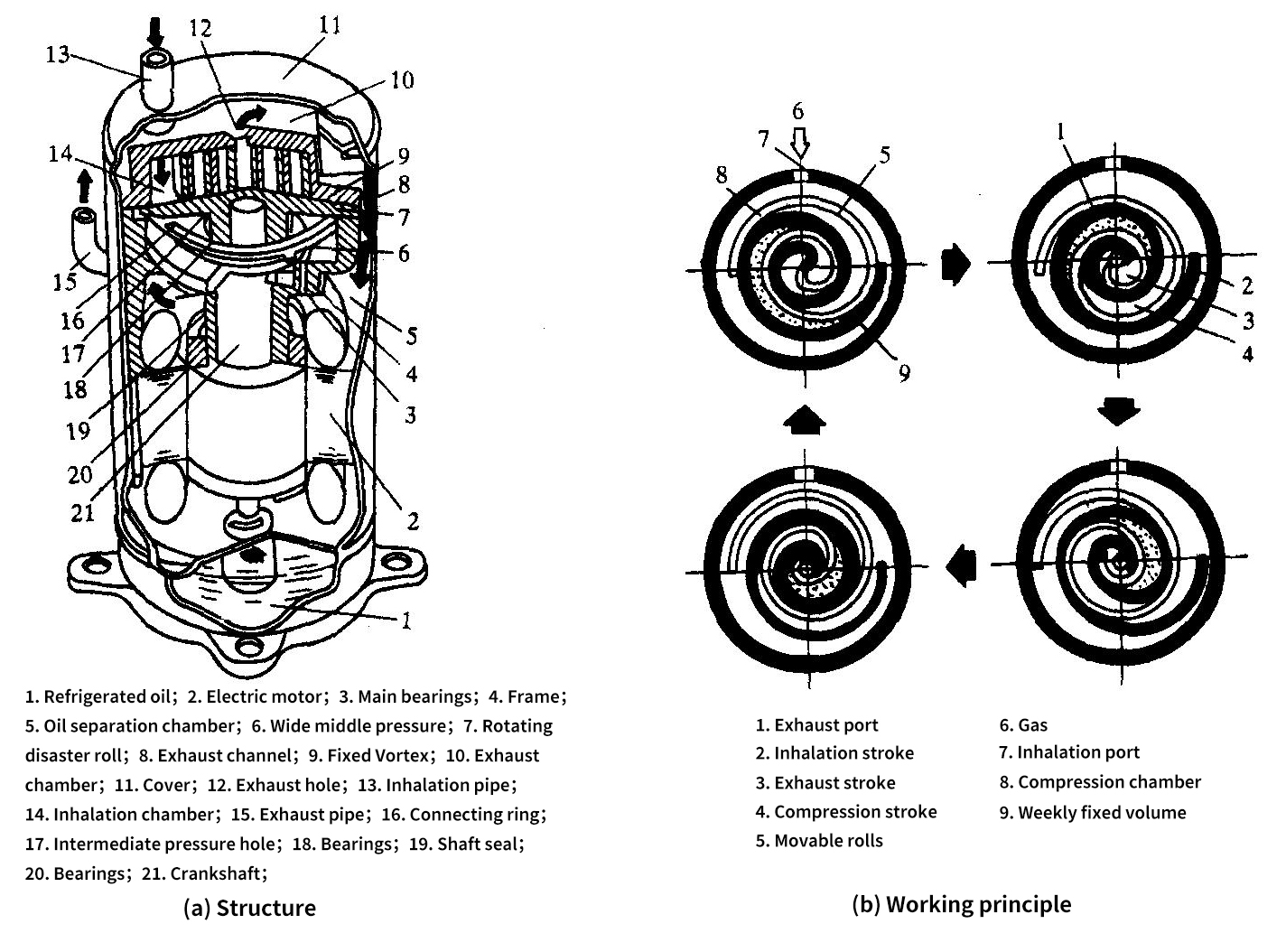
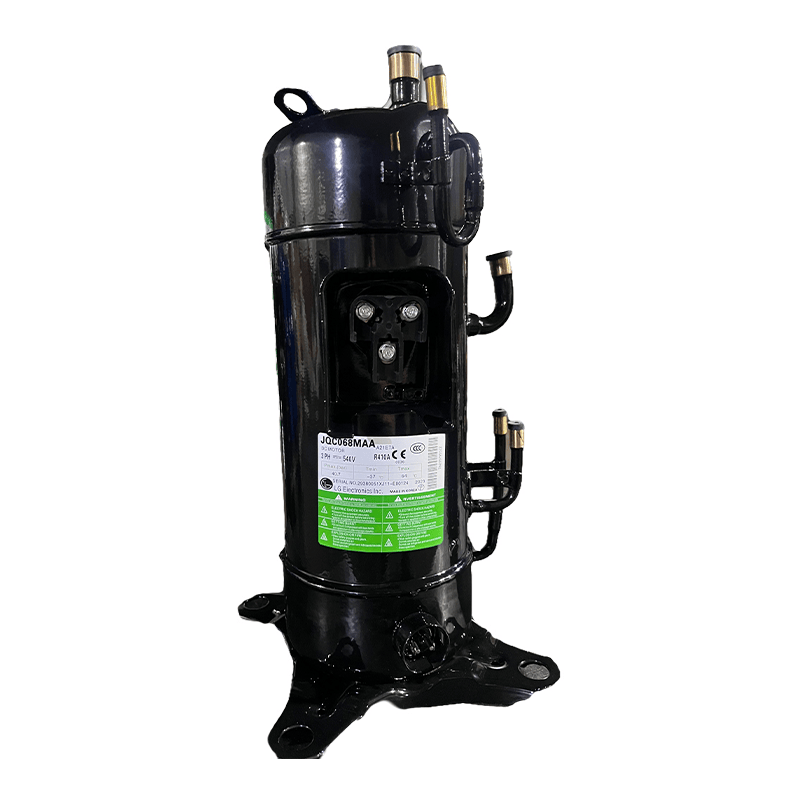
Scroll compressors are known for their higher efficiency, quiet operation, and reliable long-term performance
The core operating principle is to utilize two intermeshing scroll disks (one fixed, the other rotating around the center of the fixed disk) with a 180° phase difference, forming a series of crescent-shaped enclosed air cavities. The orbital motion of the rotating disk (not its own rotation) causes these cavities to continuously move toward the center, reducing their volume, thereby achieving the intake, compression, and discharge of gas.
Advantages and Disadvantages of Rotary and Scroll Compressors
-
Rotary Compressors
- Advantages:
Lower initial cost, simpler design
Compact and lightweight, easy to install
Suitable for smaller cooling loads and medium demands
- Disadvantages:
Higher energy consumption with larger capacities
Increased wear with high cycling or frequent on/off operation
Generally noisier, and potentially shorter service life at high loads
- Scroll Compressors
Higher efficiency, especially at part loads
Quieter operation, smoother pressure changes
Longer service life, fewer moving parts
Powerful performance, suitable for medium to large cooling loads
- Disadvantages:
Higher upfront cost
May require more complex maintenance
May require a larger unit footprint in confined spaces


What factors should be considered when purchasing?
- Load requirements: Choose a compressor that matches your cooling load. If your load is moderate and stable, a rotary compressor unit may be more cost-effective. For higher or varying loads, scroll compressors generally offer better energy savings and reliability. - Energy Efficiency and Operating Costs: Scroll compressors generally offer higher energy efficiency, which means lower long-term operating costs—critical for large cold storage facilities.
- Noise and Space: If you're noise-sensitive or have a smaller footprint, scroll compressors generally offer quieter operation and smoother performance.
- Maintenance and Lifespan: Scroll compressors generally last longer and experience less wear, which can reduce the total cost of ownership for busy facilities.
- Capital Cost vs. Lifecycle Cost: Weigh the higher upfront cost of a scroll compressor against long-term energy savings and reliability. Guangzhou Landa can help you conduct a complete lifecycle cost analysis.
- Compatibility with Your System: Consider your existing condenser, evaporator, and control system. Our one-stop design approach ensures that components work in harmony for optimal performance.
Summary
Do scroll compressors have a longer lifespan?
What is a Scroll Compressor? A Practical Guide for Cold Storage and HVAC Professionals